

Search Engine Optimization (SEO) has become one of the most essential tools for businesses and individuals aiming to build a strong online presence. In a world where millions of websites compete for attention, SEO helps ensure that your content is visible to the right audience at the right time.
At its core, SEO is the process of improving a website’s visibility on search engines like Google. When users search for information, products, or services, they usually click on the top results. SEO helps your website rank higher in these results, increasing the chances of attracting organic traffic without relying on paid advertisements.
One of the key elements of SEO is keyword research. This involves identifying the words and phrases that people use when searching online. By understanding these search terms, you can create content that directly matches user intent. However, effective SEO is not about stuffing keywords into content. Instead, it focuses on using them naturally within high-quality, informative material.
Content quality plays a major role in SEO success. Search engines prioritize content that is useful, relevant, and engaging. This means your articles, blogs, and website pages should provide real value to readers. Clear structure, easy readability, and accurate information help improve both user experience and search rankings.
Another important aspect of SEO is on-page optimization. This includes elements such as titles, meta descriptions, headings, and image alt text. Properly optimized pages make it easier for search engines to understand your content. Additionally, having a well-structured website with clean URLs and internal linking improves navigation and boosts SEO performance.
Technical SEO is equally important. Factors like website speed, mobile responsiveness, and secure connections (HTTPS) directly impact user experience and search rankings. A fast-loading, mobile-friendly website not only satisfies users but also meets the criteria set by search engines.
Off-page SEO also contributes to a website’s authority and credibility. This mainly involves building backlinks from other reputable websites. When trusted sites link to your content, it signals to search engines that your website is reliable and valuable. Social media presence and online mentions can also support your SEO efforts.
User experience (UX) is now closely tied to SEO. Search engines analyze how users interact with your website—such as how long they stay and whether they find what they need. A positive user experience leads to better engagement, which in turn improves rankings.
Consistency is key in SEO. It is not a one-time task but an ongoing process. Regularly updating content, tracking performance, and adapting to changes in search engine algorithms are essential for long-term success.
In conclusion, SEO is a powerful strategy for building visibility, attracting the right audience, and growing online presence. By focusing on quality content, proper optimization, and user experience, businesses can achieve sustainable digital growth. With patience and continuous effort, SEO can deliver lasting results and help brands stand out in the competitive digital landscape.
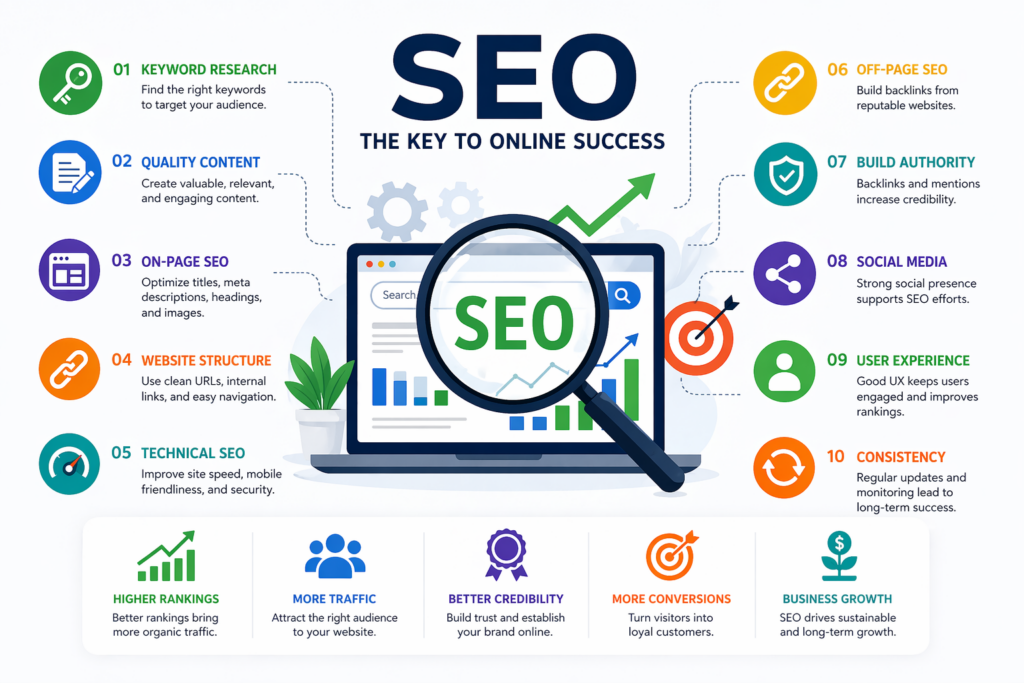
key points from the SEO
- SEO helps improve website visibility on search engines
- Higher rankings lead to more organic (free) traffic
- Keyword research is essential to understand user search intent
- Use keywords naturally, avoid keyword stuffing
- High-quality, valuable content improves rankings
- Clear structure and readability enhance user experience
- On-page SEO includes titles, meta descriptions, headings, and alt text
- Proper website structure and internal linking are important
- Technical SEO focuses on speed, mobile-friendliness, and security
- Fast-loading and responsive websites perform better
- Off-page SEO involves backlinks from trusted websites
- Backlinks increase website authority and credibility
- Social media presence supports SEO efforts
- User experience (UX) impacts search rankings
- Engaging content keeps users on the site longer
- SEO is an ongoing process, not a one-time task
- Regular updates and performance tracking are necessary
- Adapting to search engine algorithm changes is important
- Consistency leads to long-term results
- SEO helps build strong online presence and brand growth
most important SEO
- Keyword Research – Find the right keywords your audience is searching for
- User Intent – Understand what users actually want when they search
- High-Quality Content – Create valuable, relevant, and original content
- On-Page SEO – Optimize titles, headings, meta descriptions, and images
- Content Structure – Use clear headings, short paragraphs, and easy readability
- Technical SEO – Ensure fast loading speed and mobile-friendly design
- Website Security – Use HTTPS for a safe browsing experience
- Internal Linking – Connect pages within your website for better navigation
- Backlinks – Get links from trusted websites to build authority
- Domain Authority – Strong websites rank better on search engines
- User Experience (UX) – Easy navigation and good design keep users engaged
- Mobile Optimization – Make sure your site works well on all devices
- Page Speed – Faster websites rank higher and reduce bounce rate
- Image Optimization – Use alt text and compress images for speed
- Regular Updates – Keep content fresh and up to date
- Analytics & Tracking – Monitor performance using tools like Google Analytics
- Social Signals – Social media activity supports visibility
- Local SEO – Optimize for local searches (important for small businesses)
- Consistency – SEO needs continuous effort for long-term results
- Search Engine Algorithms – Stay updated with changes to maintain rankings